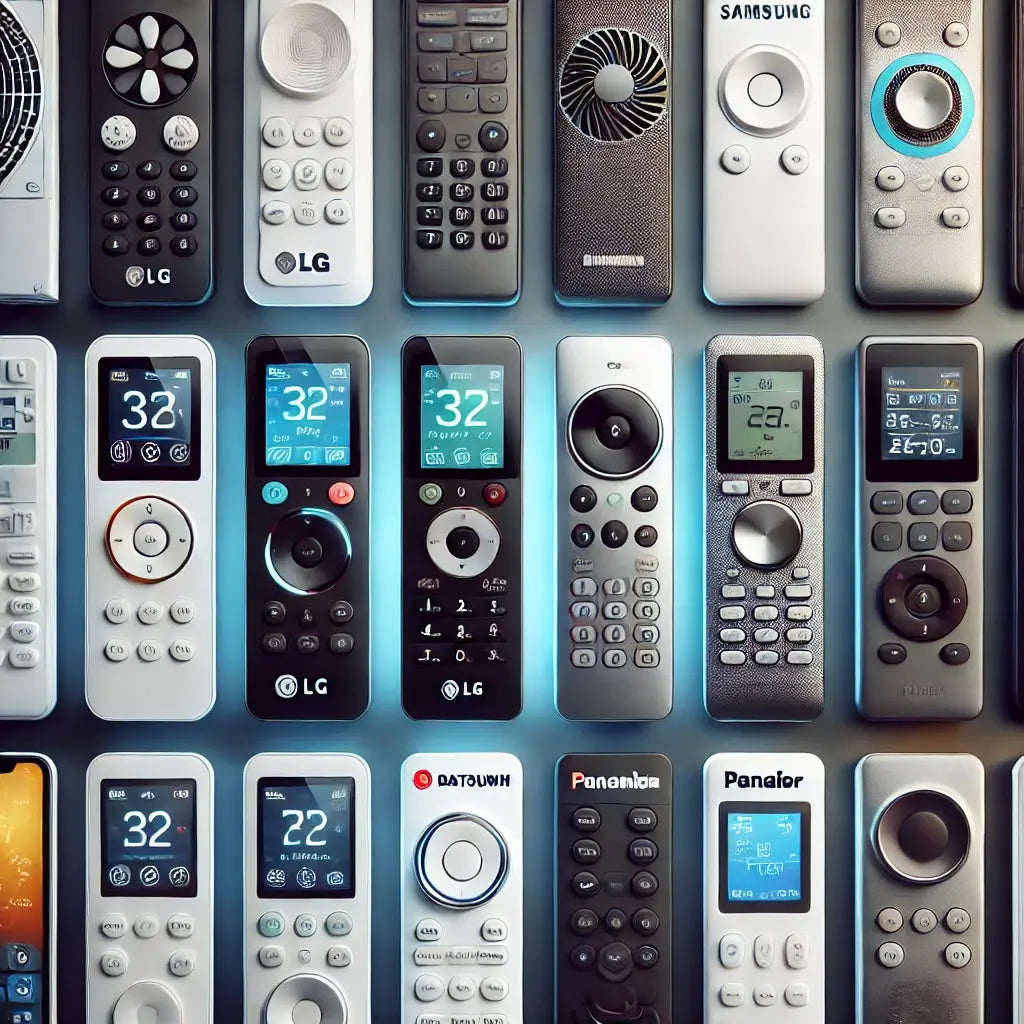
When an air conditioner’s original remote goes missing or stops working, a convenient solution can often be found in a universal AC remote. These handy devices provide flexible control over a wide range of air conditioner brands and models, allowing for easy adjustments without the hassle of multiple remotes cluttering your space. Whether you’re looking for a budget-friendly replacement or a backup remote, understanding how universal AC remotes function and selecting the right one can save time and frustration in managing your cooling needs.
What Is a Universal AC Remote and How Does It Work?
A universal AC remote is a versatile device designed to operate various air conditioner units regardless of brand, eliminating the need for brand-specific remotes. It works by sending infrared (IR) signals—the same method used by most standard AC remotes—to communicate commands like power on/off, temperature adjustments, and mode changes to the AC unit. The remote contains programmed IR codes that correspond to different air conditioner manufacturers and models, enabling it to mimic the original remote’s signals. This broad compatibility, often complemented by 433MHz RF wireless communication in some models, makes universal AC remotes a popular choice for replacing lost remotes or serving as handy backups for households with multiple AC brands.
Benefits of Using a Universal AC Remote
Universal AC remotes offer remarkable convenience by consolidating control of various AC brands into a single device, cutting down on clutter and simplifying user experience. They are typically more cost-effective than purchasing original manufacturer-specific remotes, which can sometimes be expensive or hard to source locally in New Zealand. Additionally, universal remotes are easier to find in retail stores or online, providing quick replacement options if the original remote is lost or damaged. Many models also include extra features such as timers, turbo modes, backlit and soft touch buttons, and ergonomic and durable design, which go beyond the standard controls of original remotes.
How to Choose the Right Universal AC Remote for Your Needs
Selecting the ideal universal AC remote begins with ensuring it supports your AC brands and models. Compatibility lists are often provided by manufacturers or sellers and should be checked carefully. Features like auto code search simplify setup by automatically detecting your AC’s code, while benefits such as turbo cooling modes or programmable timers enhance your control options. Ergonomics also matter—consider the remote’s size, button layout, and whether it features an LCD display for easier navigation. If convenience and advanced control appeal, smart AC controllers offer smartphone app integration, Bluetooth connectivity, and voice control functionality, whereas basic universal remotes focus on straightforward IR commands with plug and play setup.
Step-by-Step Guide to Setting Up a Universal AC Remote
Programming a universal AC remote can be done manually by entering specific brand codes, often provided in the remote’s instruction manual or available online. Begin by powering on your AC unit, then hold the setup button on the remote until the indicator light activates. Enter the brand code using the number keys. If the code is correct, the AC should respond to commands. Alternatively, many universal remotes feature an auto-search function: press the setup button and then the power button repeatedly as the remote cycles through codes until the AC responds. Troubleshooting setup problems involves checking code accuracy and ensuring the remote’s batteries are fresh. To confirm successful pairing, try adjusting temperature or mode settings to verify the AC reacts promptly. For more detailed instructions, refer to our set up guide for universal remote devices.
Common Features and Limitations of Universal AC Remotes
Standard universal AC remotes typically provide essential controls such as power on/off, temperature setting, fan speed adjustments, and mode switching between cool, heat, dry, and fan. However, they might lack advanced features found on original remotes, including AC-specific diagnostics or proprietary settings like air swing adjustments or eco modes. Some advanced universal models include smart capabilities like LCD screens, backlit keys, and turbo cooling options, bridging the gap with manufacturer remotes. Compatibility challenges can arise when controlling newer or highly specialized AC functions, especially with models that require infrared signals combined with additional wireless protocols such as 433MHz RF or Bluetooth.
Smart AC Controllers vs Traditional Universal AC Remotes
Smart AC controllers represent a modern alternative, connecting your air conditioner to home Wi-Fi networks and allowing control via smartphone apps. Unlike traditional universal remotes that rely solely on infrared signals, smart controllers offer programmable schedules, geofencing to activate AC based on location, and even voice command integration through platforms like Google Assistant or Amazon Alexa. Installation for smart controllers often involves a small device paired with your AC unit and app setup, while traditional remotes are simply handheld and ready to use. With smarter technology comes potential for energy savings by optimizing usage patterns, along with enhanced comfort through remote monitoring and control.
Using Your Smartphone as a Universal AC Remote
With an IR blaster built into some Android smartphones, you can turn your device into a universal AC remote, eliminating the need for a separate physical controller. Trusted apps such as Mi Remote or ASmart Remote IR provide extensive support for many air conditioner brands. Setting this up usually requires downloading the app, selecting your AC brand, and pointing the phone’s IR blaster at the unit to test commands. While convenient, smartphone remotes depend on hardware availability—many newer phones lack IR blasters—and may not always replicate every function of original remotes, limiting advanced feature use.
How to Turn On/Off Your AC Without a Remote
If a remote is unavailable, most air conditioners include a discreet physical power button, often hidden behind the front panel or near the unit’s control panel. Accessing it safely requires avoiding damage to the unit or voiding warranties. This manual method provides a quick fix but is inconvenient for routine use, lacking temperature or mode controls. To avoid disruptions, replacing lost or broken remotes promptly is recommended with options ranging from universal replacements to smartphone-based control solutions.
Troubleshooting Common Issues with Universal AC Remotes
When a universal AC remote fails to function, start by checking the battery status, as depleted or poor-quality batteries cause most issues. Replacing with fresh alkaline batteries often restores responsiveness. If problems persist, perform a reset by removing batteries and pressing the power button for 10 seconds to clear stored codes. Reprogramming the remote may fix connectivity errors due to code mismatch, especially if an incorrect brand code was entered. Intermittent responses can stem from signal blockages or low battery power. For persistent compatibility concerns, verify that your AC model is supported and consult user guides to select the proper code.
Tips for Maintaining and Extending the Life of Your Universal AC Remote
Preserving your universal AC remote begins with keeping it clean and dry, avoiding spills or exposure to extreme temperatures that may harm internal circuits. Battery care is crucial—remove batteries if the remote won’t be used for extended periods and test them regularly to prevent leakage damage. Store the remote in a designated spot to reduce risk of loss or accidental drops. For smart universal remotes, check for firmware updates periodically to enhance performance and fix bugs, ensuring continued compatibility with evolving AC technology.
Where to Buy Reliable Universal AC Remotes in 2026
In New Zealand, reliable universal AC remotes can be sourced through trusted online retailers such as Mighty Ape or Amazon, as well as physical electronics stores like JB Hi-Fi. Always check for warranty coverage and read customer reviews to gauge product reliability and compatibility. Manufacturer websites sometimes offer official universal remotes optimized for their AC lines, providing peace of mind on functionality. Pricing varies widely based on features and brand, with basic models affordable yet sufficient for everyday use, while smart remotes command a premium for added convenience and connectivity.
Future Trends: The Evolution of Air Conditioner Remote Controls
Looking ahead, AC remote controls are rapidly evolving with voice interaction becoming a norm, enabling hands-free adjustments through assistants like Siri or Alexa. AI-driven smart remotes learn user preferences, adjusting cooling patterns for enhanced comfort and reduced energy consumption. Integration with Internet of Things (IoT) platforms facilitates seamless operation across home devices. Innovations focused on energy efficiency continue to influence remote features, encouraging smarter, eco-friendly cooling strategies. Staying updated on these emerging trends ensures selecting a remote that not only meets current needs but also adapts to future smart home environments.